


European Astrocartography Interview Series 2025–26
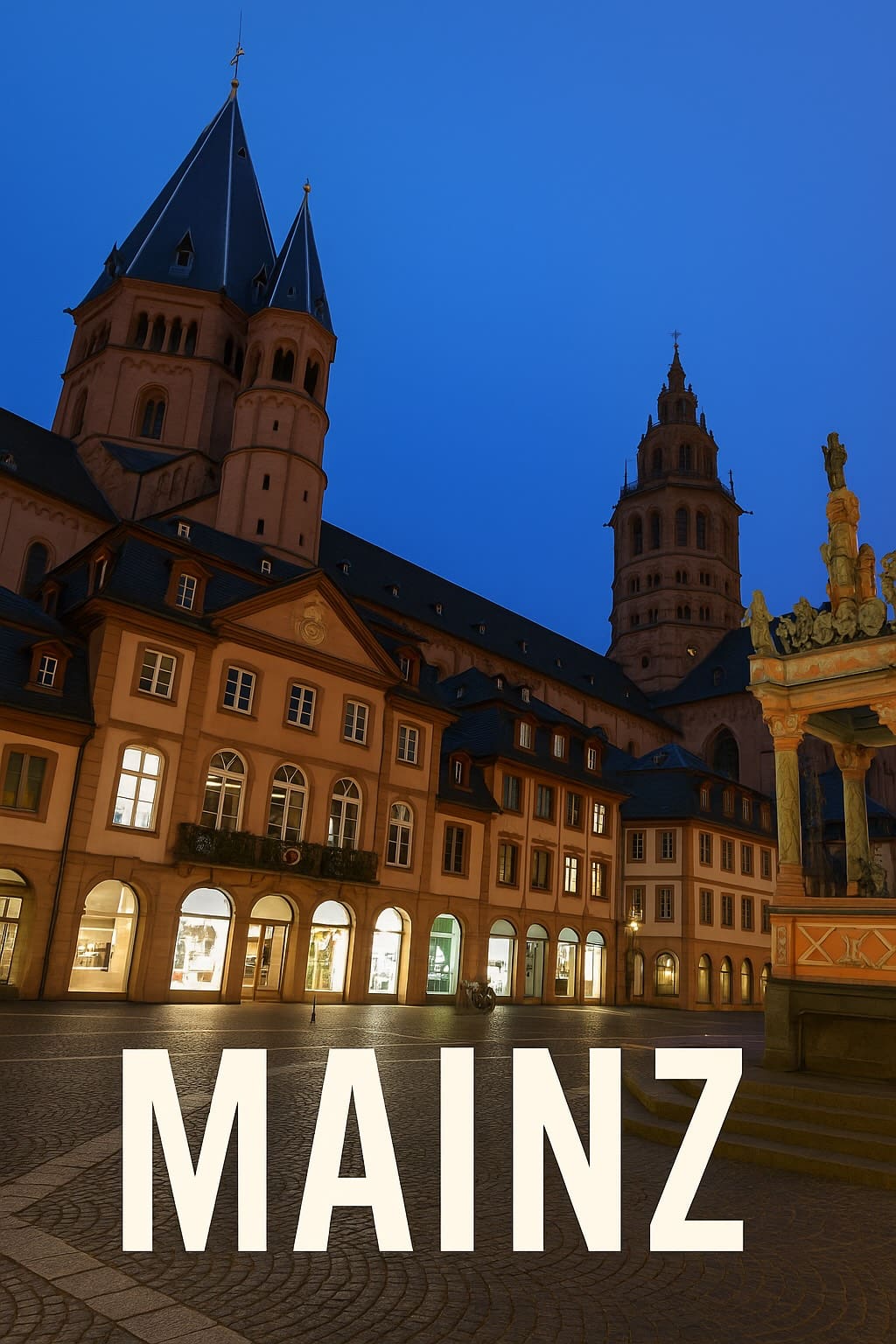
Following our previous conversation in Amsterdam with Faye Blake, we continue the European Astrocartography Interview Series 2025–26. For our second interview, we travel to Mainz, Germany, to meet Anne C. Schneider, a scholarly astrologer whose work blends classical rigour with modern relocation technique.
Anne stands at the intersection of two relocation astrology traditions. She brings the analytic precision of the Ciro Discepolo Italian school into dialogue with the American astrocartographic framework pioneered by Lewis. This creates a kind of harmonic bridge between temporal cycles and spatial design, fitting for a musicology major born under a Saturn AC/Neptune MC paran.
We first met during Kepler College’s AstroMapping Programme, where her clarity of thought and methodological precision immediately stood out.

European Relocation Astrology
In Europe, relocation astrology evolved along a distinct path from that developed in the United States. Jim Lewis’s Astrocartography, together with Michael Erlewine’s Local Space, established the spatial foundations of modern relocation astrology. By mapping planetary angularity from natal and relocated charts to describe the enduring geometry of place.
Around the same period in Italy, Ciro Discepolo advanced a complementary approach. Through the relocation of Solar Return charts, he explored how a change of location at one’s birthday might redirect the tone of a single year.
The two lineages differ in purpose and scope: one structural and lifelong, the other cyclical and annual. Yet, both seek to understand how geography interacts with human potential.
Over the past decade, she has developed and refined a distinctive approach to Solar Return relocation. She uses astrocartography to plan birthday travel. From here, she reexamines how the relocated solar chart can amplify or redirect a year’s potential.
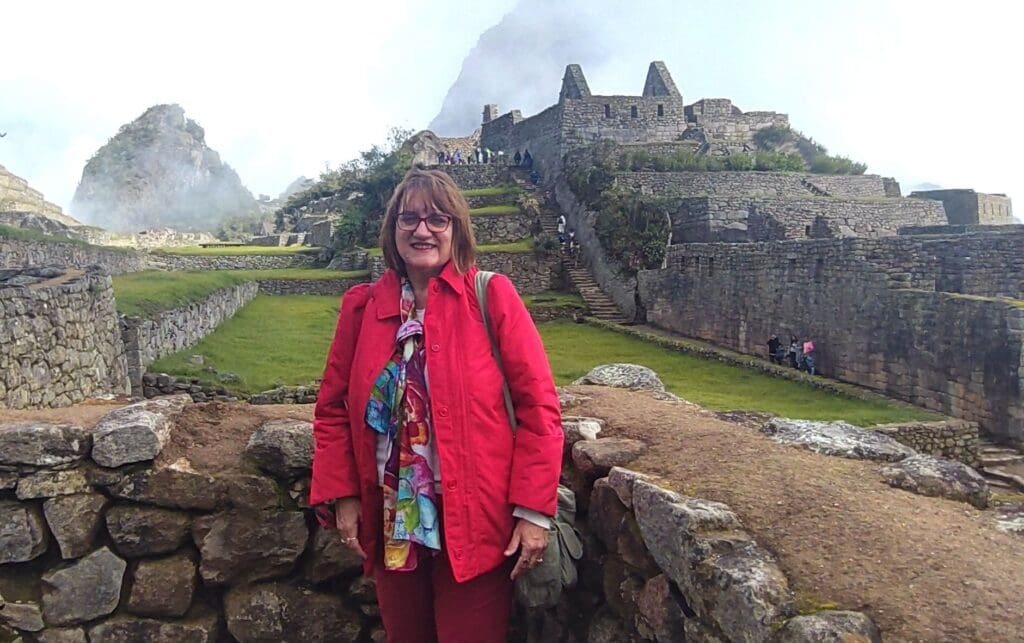
As we conduct this interview, Anne is preparing to celebrate her next solar return in the United States where her Moon will align with her Midheaven. This is proof that she follows her own philosophy. In practice, her solar-return map carried her to Lima, Peru.
“Each year’s chart deserves its own sky.” In 2024, her solar-return map took her to Lima, Peru.
Roots, Language, and a Lifelong Practice
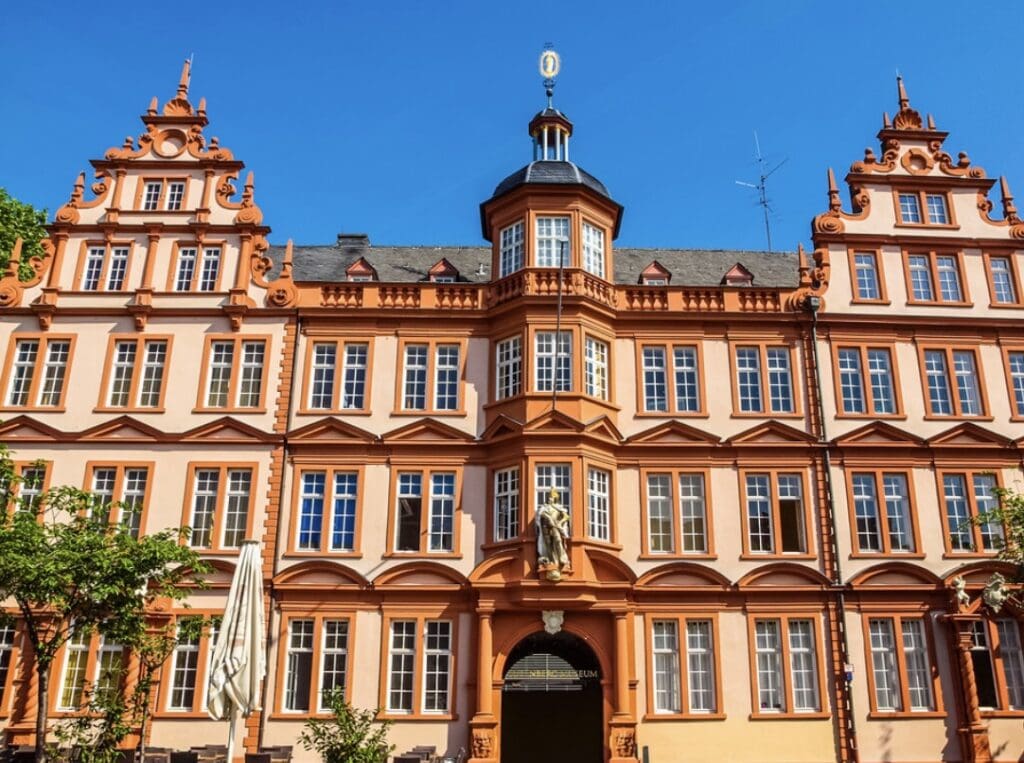
Anne comes from Mainz, a city whose intellectual legacy is inseparable from Johannes Gutenberg and the history of printing in Europe. The city reflects a long tradition of scholarship, transmission, and the preservation of knowledge. It’s the perfect backdrop for someone whose fluency in German, English, and Italian allows her to move easily between astrological schools of thought.
“I have been studying and practicing astrology for decades – in fact since the age of nine. As a teenager, I was asked to identify public figures solely from their charts on a German television programme and got them all right”.
She often refers to this moment as an early confirmation that astrology would remain a lifelong discipline. Her background reflects classical Western astrology, modern approaches, Uranian techniques, Vedic astrology, and both mundane and traditional branches.
She has long participated in the deutschsprachige astrologische Gemeinschaft and served for many decades within the Deutscher Astrologen-Verband e.V. (DAV), Germany’s principal professional astrology association, including six years as its Vice President.
Astrocartography and Relocation Training Across Lineages
“I didn’t learn A*C*G directly from Jim Lewis, but from instructors at Kepler College. First generation students of Jim Lewis such as Maya White, Arielle Guttman and Karen McCauley. Each of them focuses on a particular field of interest, for example Arielle’s work with asteroids in astrocartography”.
Anne’s foundation in relocation astrology is polyglot by design. Her formal study at Kepler College introduced her to the American astrocartographic traditions, but her earliest and most formative influences came from Europe. This is clear through her work with Ciro Discepolo, architect of the Astrologia Attiva approach.
“Before I came into contact with Kepler College, I had two teachers in Europe who practised relocation. Most influential was Ciro Discepolo with his work on Relocated Solar Returns.”
About Ciro Discepolo

The Discepolo method is based on the belief that Solar Returns must be cast for the location where the individual is physically present at the exact moment of the solar return, not for the birthplace or domicile. He maintains that changing location at the moment of the Solar Return meaningfully alters the symbolic structure of the year ahead, sometimes dramatically.
This position is not presented as speculative but as empiracally derived, based on from thousands of case studies accumulated over approximately thirty years of practice (1970–2007).
His software program, My Astral, offers graded city options based on goal-oriented chart structure.
“Usually the ACG map is not drawn, but only the natal and the relocated Solar Return chart,”
Known as the Aimed Solar Return, it emphasises travelling to a specific location at the exact time of one’s Solar Return to optimise the year ahead. This approach is distinct from classic astrocartography, as it privileges timing and the symbolic structure of the return chart over spatial mapping alone.
The synthesis she brings allows for both long-term geographic insight and precise annual planning, uniting space and time in a single interpretive framework. With this rare combination – American spatial mapping and Italian temporal technique – Anne offers a practice that bridges both schools.
A European Precedent: Morin de Villefranche
“The relocation of Solar Returns is not a modern invention.”
“I am also keen on exploring the historical perspective and work through the relocated return charts from French 17th astrologer Morinus. In Astrologia Gallica, Morin examined Solar and Lunar Returns relative to place of residence rather than birthplace, recognising the importance of angularity for yearly forecasts.”
About Morin
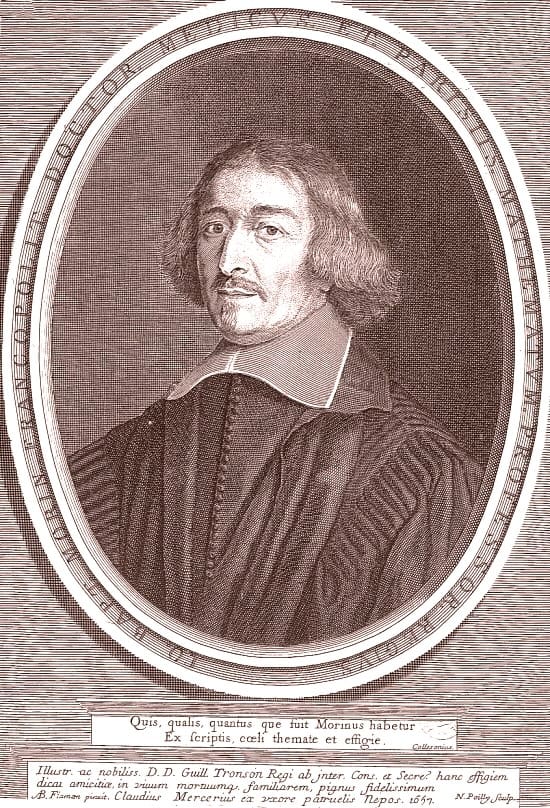
Jean-Baptiste Morin de Villefranche (1583-1656):
- A French astrologer, doctor, and mathematician.
- Best known for his 26-volume work Astrologia Gallica, published posthumously in 1661.
- Volume XXIII, Revolutions, deals with Solar and Lunar Returns. This is what he calls “revolutions of the year”).
- He did not advocate for the chart of birth place alone.
He argued that the place of residence (or current location) is often more relevant for interpreting a return. - He introduced methods for directing and rectifying return charts. This includes planetary directions and profections to refine annual predictions.
- He never used “astrocartography”, yet he did link solar returns to geographic space.
Anne is careful to situate contemporary relocation methods within a much longer European tradition. She regularly references the work of Jean-Baptiste Morin de Villefranche (1583–1656), whose treatise Astrologia Gallica laid essential groundwork for the technique of relocating Solar and Lunar Returns.
Morin’s contribution to Astrocartography
Morin’s contribution was structural rather than aspirational. He did not encourage long-distance travel for its own sake. But rather, he insisted that where a person experiences their Solar Return geographically changes the angles of the chart. This movement thereby refines the year’s prediction. His insight underpins much of the logic behind both the Italian and modern approaches Anne now combines in her own practice.
“For me, the Italian method represents a modern refinement of a principle already articulated in seventeenth-century astrology. Annual returns describe a cycle. Relocation allows that cycle to be framed more precisely.”
“My own projects currently are focused on publishing a book about my experience and expertise with relocated Solar and Lunar Returns and to lecture more about the subject to make it more widely known.”
Morin’s work is a reminder that even as techniques evolve and adapt, the core questions of time, place, and the geometry of potential remain constant in European astrology.
Anne C. Schneider’s work
Anne’s Practice in Focus
“One of my specialties is relocating Solar and Lunar Return charts for optimisation of the period covered. Since most of my clients are not moving permanently, they are usually seeking suitable locations for travel or temporary stays connected to important timing techniques.”
“Regarding a suitable place for vacation, either transits or a lunar return chart projected on a map for a specific time period can indicate good places for relaxation, adventure or cultural pursuits.”
Anne’s consultancy is rooted in timing and intent. The majority of her clients in Germany and Europe are not seeking life-long moves, but rather solutions for a birthday, sabbatical, or temporary chapter. Her planning process is never generic; every suggestion is tailored to an individual’s objective—whether that’s rest, career, partnership, or simply a memorable journey.
Anne’s method
“Relocated Solar / Lunar Returns have a limited duration in any case. They can be interpreted only to a certain degree as standalone charts and remain interconnected with the natal.”
The art of Anne’s method lies in calibrating the annual or monthly chart for maximum effect, rather than chasing the illusion of permanent change. The relocated chart is always referenced back to the natal, reinforcing her conviction that timing shapes experience, but does not erase the individual’s core framework.
She is also clear-eyed about the technical requirements:
“Travel has to be to new time zones to change the angles and house positions… Sometimes, destinations are located at higher latitudes or on remote islands… but only rarely in areas a person would normally plan to go.”
For Anne, astrology is not about a fantasy of reinvention; it is about leveraging the windows of opportunity that arise each year. The real challenge—and expertise—comes in selecting destinations that fulfil both the astrological and practical realities.
“The natal chart provides the framework. The aspects remain wherever the person lives, but they can obtain a new focus in another distant place.”
As Anne says: “Each year’s chart deserves its own sky.”
Anne does not set spatial and temporal methods in opposition, but overlays them to shape a more nuanced forecast. She draws on the spatial map of astrocartography for enduring patterns and uses Solar and Lunar Return relocation to highlight annual priorities. Her music background informs this approach: “the natal chart sets the theme, and each relocated Solar Return offers a new variation.” This harmonic logic is unique in her practice. “Never one-size-fits-all.” It’s a layered response to each client’s needs.
Anne’s Reference Point
“For me, the natal chart is always paramount.”
“Even permanent geographical changes can only develop the potential that’s already inherent in the chart.”
This grounding principle underlies every consult. Anne sees relocation, temporary or otherwise, not as escape or transformation, but as a conscious act of refinement. The natal chart, in her hands, remains the constant reference point, ensuring the advice is both strategic and realistic.
Bridging Techniques: Combining Relocated Solar Returns and Astrocartography

“I have immersed myself into astrocartography and relocation following my Italian mentor, Ciro Discepolo. He is the major exponent of relocated Solar and Lunar Return charts and has published dozens of books on the topic.”
Anne’s approach is defined by a rare technical fluency in both spatial and cyclical relocation – a synthesis that is the hallmark of her consulting work.
For annual planning, Anne relies on the Aimed Solar Return system, rooted in decades of empirical case studies and expressed in Ciro Discepolo’s “My Astral” software. This allows her to offer clients a graded list of cities matched to their goals – be it health, career, or relationship – based on the unique angular shifts each location provides at the moment of the Solar or Lunar Return.
Additional Context
“Most of my clients have a basic understanding of the planetary energies. However, they don’t feel able to apply themselves the rule set for selecting an appropriate location. Thus, they seek advice from me.”
“I don’t know if anybody else apart from me practices this technique in Germany.”
Alongside this cyclical technique, Anne integrates astrocartography and local space mapping. This gives her a spatial view of the client’s life themes and potentials.
“My main software is SolarFire for most astrogeographical purposes. Astro-seek also offers a few features to quickly check the changes of relocated charts or a series of Lunar returns.”
In her process, lifelong spatial mapping (the Lewis approach) sets the enduring context. Discepolo’s method re-tunes the chart for each year’s priorities. Anne’s harmonic fusion of space and time means her clients are never forced to choose between a “best place for life” and the “best sky for the year.”
Each consultation is shaped by the client’s needs, the possibilities of the natal chart, and the unique technical pathways that only a dual-method practitioner can offer.
Practice Makes the Astrocartographer
“Any astrologer specialising in A*C*G should first be a confident and well-versed astrologer in general. They should have a good understanding of many walks of life. You need to be well-versed in both astrology and geography and have a sound understanding of how planetary lines interact with the realities of place. It is not enough to interpret lines theoretically or from a book.”
For Anne, theory alone is never enough. The true skill of an astrocartographer is forged through lived practice. Travel, cross-cultural experience, and the continual testing of astrological principles against real-world outcomes is primordial.
She insists that every map must be tested by direct observation:
“Every map needs to be tested by real-life experience. Preferably, through your own travels and by speaking with people who have actually lived under those lines.”

Anne’s own career – spanning countries, languages, and professional contexts – has shaped her flexible, practice-driven approach:
“I have learned a lot from changing countries, languages, and cultural frameworks. Every place has its own logic. You need to learn the culture and adapt your interpretation, or you’ll miss the real story. What you see in the sky must always be matched with what you see on the ground.”
This ethos sets apart genuine practitioners from those relying on formulaic, cookbook or superficial readings. Anne’s work demonstrates that astrocartography, at its best, is both a technical discipline and a lived art.
Applying Astrocartography: London as Living Example
Anne’s commitment to testing astrological theory in real life finds its fullest expression in her years spent in London. A city chosen not by chance, but for its resonance with her own astrocartography.

“After my first Saturn return, I eventually managed to move away from my birthplace, Saarbrücken… For professional reasons, I moved to London, UK, close to my North Node AC line, also within range of my Moon IC (finding a new home). For me, it is difficult to distinguish the influence between the NN and the Moon, as they are so close. And funnily enough, my flatmate for five years was born on the French side of my Moon IC line.”
This move was more than a change of address; it marked a turning point personally, professionally, and astrologically.
“I felt very well there and inspired, especially having some distance to my overbearing mother (Saturn). Moon (= natal MC ruler, positioned in house 3, but close to the IC) offered good chances to thrive as an editor in classical music business. On my NN line, I made many new contacts through my job, attending a myriad of musical performances, and meeting artists from our label DECCA.”
The city’s convergence of her Moon IC and North Node AC lines proved fertile ground for both personal growth and professional flourishing. London was a place of emancipation. A location where she could redefine herself far from early family patterns.
The Gateway City
“Being in the British capital meant also to find astrologically a totally new direction. Although I had obtained an astrological certification in Germany, in London I was able to open my horizon immensely, as I became acquainted with medieval and Renaissance astrology, mundane and even Vedic astrology – fields that should prove my future astrological territory.”
The London example demonstrates Anne’s core professional belief: to truly understand the power and subtlety of relocation astrology, one must live it, observe its effects, and let each place reveal its own possibilities.
“This period was one of the most rewarding times in my life, and in retrospect I can say, the knowledge I acquired in London was a great foundation for later developments in my life.”
Testing her Relocated Solar Return in the USA

“This year, my focus was on having the Solar Return Moon positioned high in the chart – a placement traditionally associated with visibility, public engagement, and professional emphasis.”
In November 2025, Anne set off to spend her Solar Return in Charlotte, North Carolina, applying the same precision she brings to her client work to her own annual planning.
Her intention was clear. Work with a chart that foregrounded visibility, exchange, and professional momentum. Her activated Jupiter AC line preps her for a year oriented toward growth and opportunity.
SOLAR RETURN MAP AND CHART
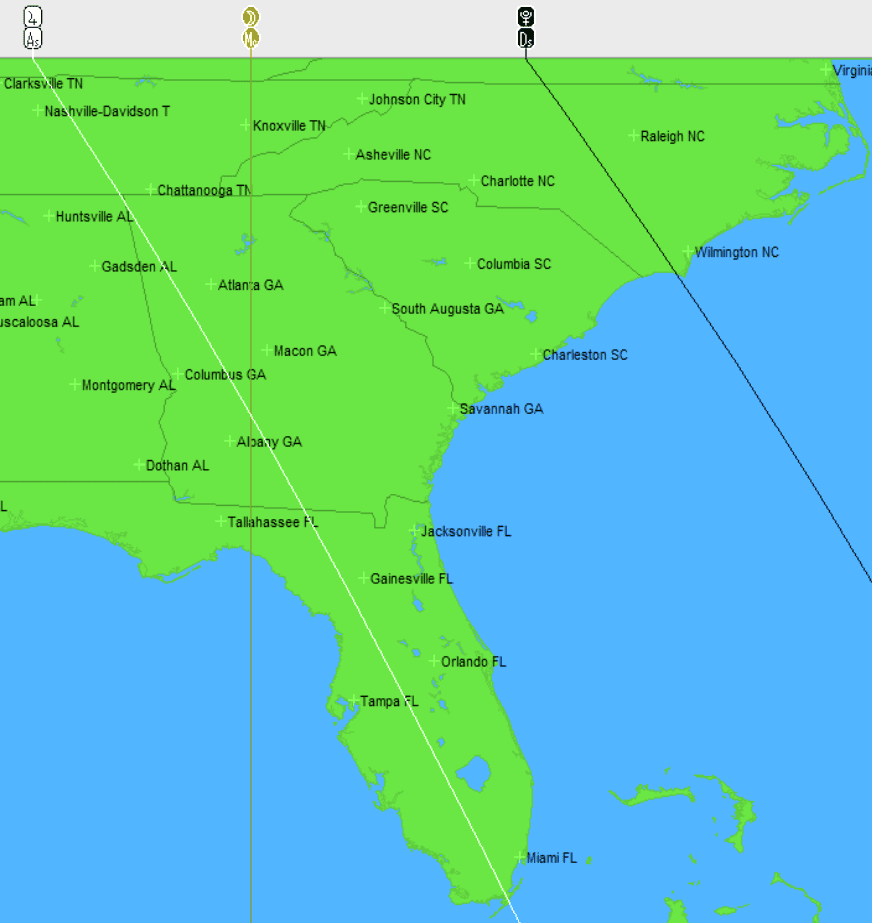
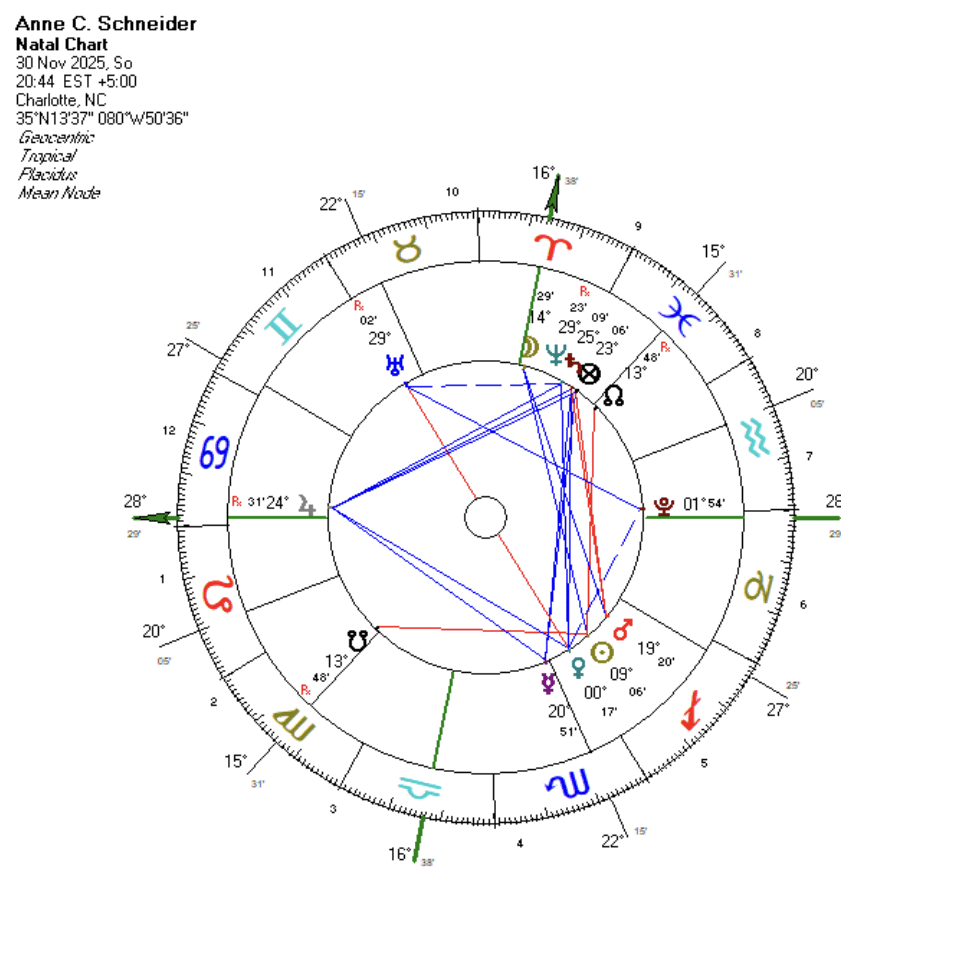
The relocated Solar Return chart set a distinctly expansive tone. A Grand Water Trine linking Jupiter, Saturn, and Mercury framed the year around learning, teaching, writing, and communication grounded in lived experience.
Clear Effects

“Within weeks of the Solar Return, the symbolism began to manifest concretely. Travel, research, and education (classical ninth-house themes) have dominated the weeks that followed. Approximately sixty per cent of my time was spent away from home. The National Council for Geocosmic Research invited me to participate in a research group. I am close to completing Kepler’s AstroMapping Certificate programme.”
Even as her weeks filled with travel and activity, Anne remains attentive to the longer arc of the year.
“The bets are still in. A relocated Solar Return does not reveal itself all at once. Its effects unfold gradually, as the angles progress through the full cycle of the year. The value of the technique lies less in instant confirmation than in disciplined observation over time.”
What distinguishes Anne’s approach is her willingness to remain in dialogue with the chart. Testing, refining, and observing how intention, geography, and timing interact in real life. The ongoing process, rather than any single outcome, is what ultimately defines serious practice.
About Anne C. Schneider
Anne C. Schneider is a German astrologer, editor. She is a researcher known for her long-standing engagement with astrological method and professional standards within European astrology. Actively involved in the Deutscher Astrologen-Verband (DAV) for over two decades. She served as Vice-Chair from 1999 to 2005 and founded the association’s Mundane Astrology section, which she continues to organise.
Serving as co-founder, she led the DAV section for Classical and Horary Astrology. This allowed her to contribute to the structured transmission of traditional astrological techniques in Germany.
A central focus of Schneider’s work is relocation astrology which takes into account permanent relocation and the optimisation of Solar and Lunar Returns. Insomuch, she combines the principles of astrocartography developed by Jim Lewis with the Italian Aimed Solar Return methodology taught by Ciro Discepolo.
Anne C. Schneider is an active lecturer and author. Her wealth of work reflects a sustained commitment to astrology as a cross-disciplinary field of study.
Anne C. Schneider is co-author of Karma und Astrologie (Chiron Verlag).
To read Anne’s full bio: Astrowiki
Up Next in the Series: Beyond Familiar Latitudes
Astrocartography has largely been developed and tested within familiar latitudes, where angular behaviour remains stable and interpretive frameworks hold. At the edges of the map, those assumptions begin to strain.
What emerges at extreme latitudes is not a rejection of astrocartography, but a reminder of its limits and of the necessity of lived experience. When projection bends, angularity compresses, and conventional house structures falter, interpretation can no longer rely on theory alone.
The next interview introduces a Danish astrocartographer working in Greenland and marks the opening of a broader inquiry within the European Astrocartography Interview Series. In the conversations that follow, European practitioners operating at the geographical margins speak from direct experience – first from the far north, then from the opposite pole – allowing north and south to be read in dialogue.
Author and Editor: Kristine Odegard, Certified Astrocartographer.
This article forms part of the European Astrocartography Interview Series, an editorial publication series edited and published by Kristine Odegard.”


Comments +