



European Astrocartography Interview Series 2025–26
Among the pioneering voices to bring astrocartography into European professional practice, Faye Blake stands out for her synthesis of business consulting, psychology, and astrological mapping. Founder of the Amsterdam School of Astrology and holder of an M.A. in Cultural Astronomy and Astrology from Bath Spa University, she has spent four decades translating planetary language into organisational insight.
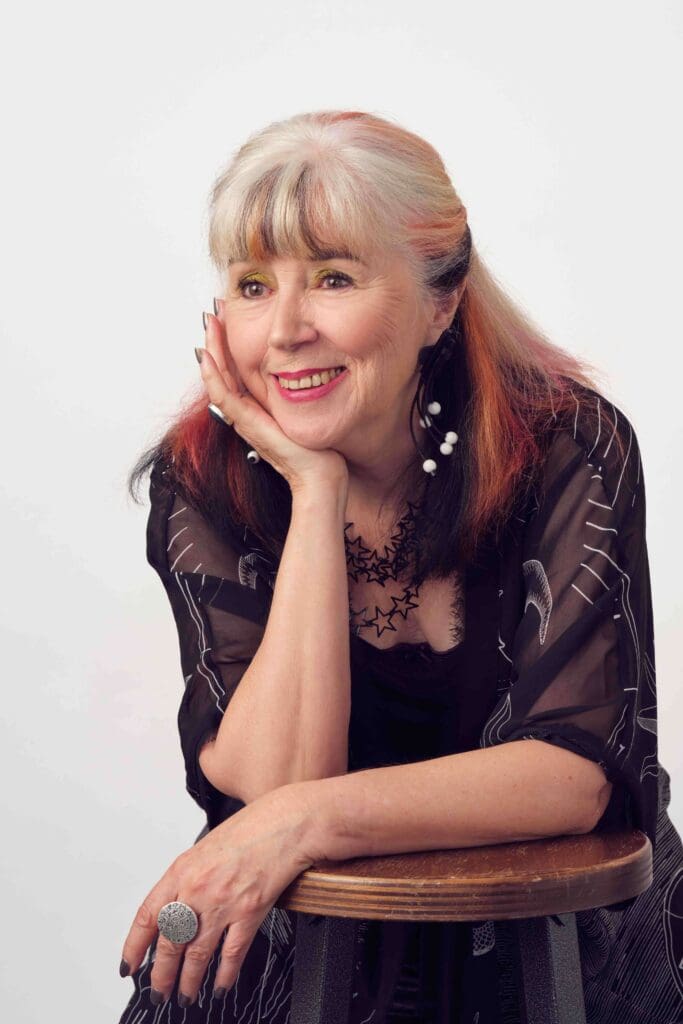
Her 2002 essay “The Business of Place and the Place of Business” in Martin Davis’s From Here to There: An Astrologer’s Guide to Astromapping remains one of the first European case studies applying astrocartography to corporate strategy. I first encountered that chapter while taking Kepler College’s Astromapping certification and later attended Faye’s seminar on Ceres, whose environmental symbolism she continues to explore.
We met to revisit those early projects, her continuing interest in planetary fields, and how astrocartography may evolve in a world increasingly shaped by business, ecology, and movement.
Early Work and European Beginnings
“I started as a professional astrologer in 1986 when I first moved to Amsterdam. I’d studied in the ’70s in New Zealand by correspondence and got totally hooked on astrology in London in the mid-’80s. I heard about Astro*Carto*Graphy during those years. When I started my practice in Amsterdam, many expat clients came with ‘where’ questions, so I studied locality in more detail.”

In an era when few astrologers worked with relocation charts, Blake was already responding to the needs of an international clientele. Amsterdam’s cosmopolitan environment became her testing ground – the place where psychological astrology met the emerging cartographic techniques of Jim Lewis. By the end of the 1990s she was integrating astrocartography, relocated charts, and local-space directions, into her consulting practice – years before such multi-layered mapping became standard in Europe.
The KLM Case – When Corporations Relocate
“I was studying the merger of KLM (a client at the time) with Air France, based in Paris, and had another client asking about design-contract issues. So I had practical examples to work with.”

Her KLM study examined the airline’s natal chart of 7 October 1919 (The Hague). A Sun–Descendant line running through Minneapolis corresponded with the 1989 alliance with Northwest Airlines, while a Sun–IC line through Paris foreshadowed the later Air France merger.
In her analysis of KLM, Blake used the company’s incorporation chart, applying astrolocality techniques to examine how the airline’s operational field mirrored its corporate identity. For Blake, corporate charts respond to geography much as personal ones do: the location of a headquarters, partnership, or acquisition reflects the planetary patterns carried in the company’s own horoscope.
“Astro*Carto*Graphy gives the broad overview; Local Space, a Western form of Feng Shui, adds proximity. For corporate clients, the compass approach can clarify where to situate teams, offices, or even desks, while the relocated chart shows how the company’s identity shifts in new territory.”
Her combination of techniques was remarkably prescient. Two decades later, corporate astrocartography and place-diagnostic consulting are still developing along the lines she traced in the early 2000s.
Relocation and Vocation
“Relocation studies the ‘where’ question – what you’ll come across in another place, what you can learn there. It has nothing to do with vocation. Vocation is in the natal chart – you can run but you can’t hide! Vocation depends on inner calling; some places are more suitable because they are nurturing for you.”
Her clarity here is disarming: relocation reveals context, not purpose. Yet that nuance may explain why her work resonates with today’s business astrologers, who look for cities or regions that support rather than redefine an enterprise’s goals.
Her methodology emphasises environment – a thread that leads directly to her long-standing fascination with Ceres.
Ceres and the Geography of Growth
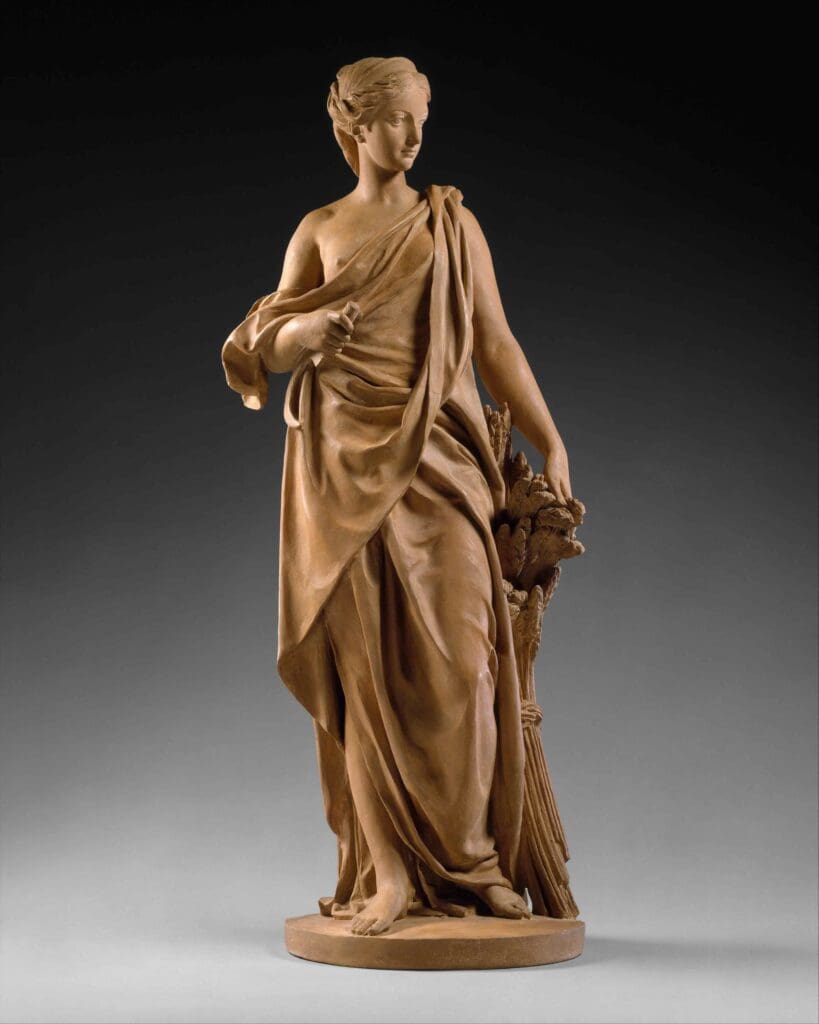
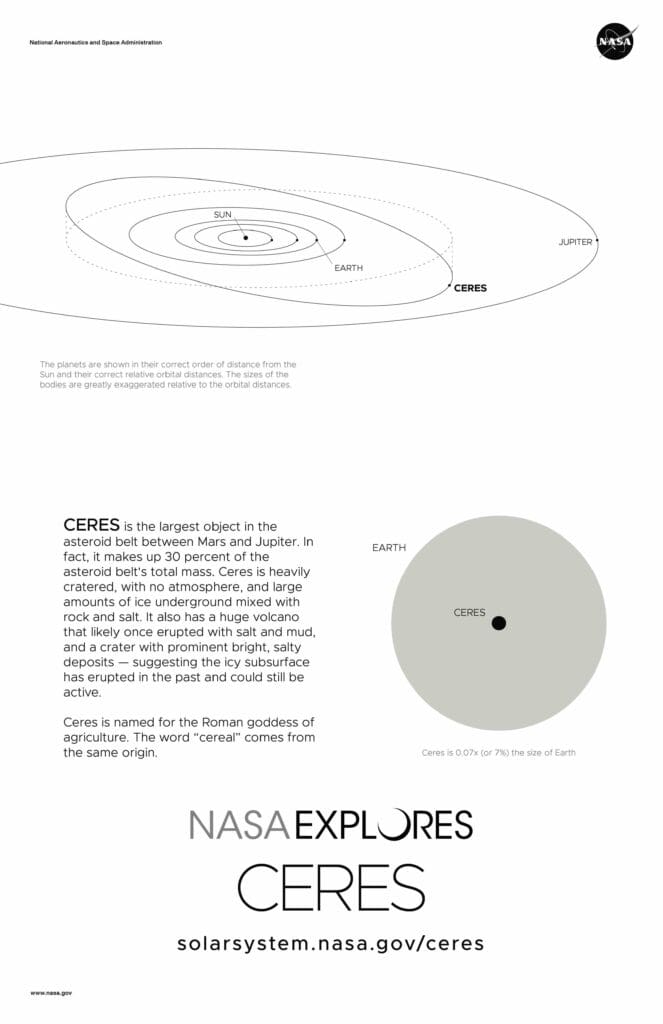
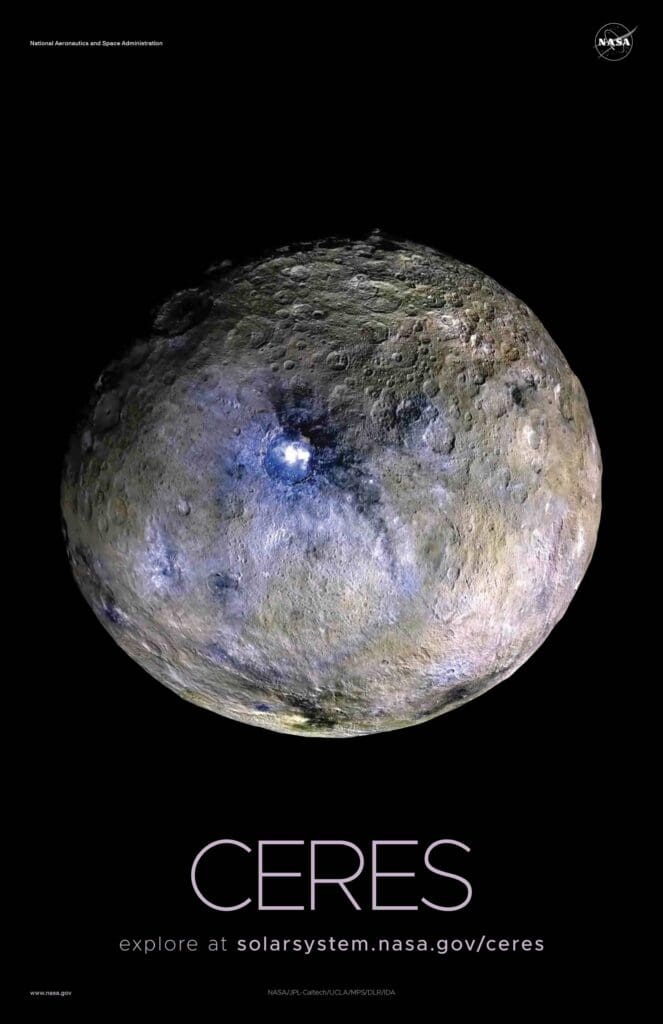
“My interest developed because I wrote a paper on morphic fields and Uranus for my M.A. After that Ceres was upgraded in 2006 to a dwarf planet – the same as Pluto. In ‘as above, so below’, I wondered what that meant for astrology in terms of morphic fields and everything else Ceres. Why was she important now and why was she coming back into world consciousness? Since then I’ve developed a lot of Ceres material. She’s not about vocation as such – her link is to environment: suitable spaces for work or an office, suitable towns or countries and also colleagues.
Blake has often described Ceres as “an antidote to Pluto’s extremes,” a planetary archetype that restores balance and reintroduces care where intensity or power may dominate.
In practice, she observes that Ceres often resonates through enterprises grounded in environmental issues. “If a company’s mission involves beekeeping, bread baking, green energy, recycling, or natural health,” she explains, “I might suggest they research places that emphasise Ceres energies.”
For her, Ceres measures the ecology of a chart. It’s about how a place supports one’s vitality. In business astrocartography this becomes a question of fit: whether a corporate culture, partnership, or location allows the system to thrive. Blake uses the metaphor of being “planted in the right soil.” The emphasis is not on expansion but on right relationship where an organisation or individual can take root and flourish.
Ceres in Her Own Chart
“I have Ceres next to Mercury in my chart. Communication is important for me to feel comfortable, so I needed to learn Dutch.”
She notes that both planets fall in her seventh house – fitting for someone whose professional life revolves around collaboration and dialogue. Blake smiles when describing herself as “the Ceres lobbyist”.

Her remark captures the essence of her work – a life built on conversation across languages, cultures, and symbolic systems. A Ceres–Mercury pairing suggests not only verbal dexterity but the impulse to nurture through dialogue, to feed understanding rather than impose it.
For someone whose professional identity is inseparable from international teaching, the symbolism is striking. Her lectures on Ceres have, in many ways, become living demonstrations of the archetype itself: restoring balance, bridging perspectives, and cultivating growth through communication.
Cultural Resonance and Ethical Clarity
“Astro.com makes it look simple – that if you go to a place where Venus is strong, you’ll meet the love of your life, or Neptune will be spiritual. I try to explain that you take your whole chart with you – aspects and all. If a planet is on an angle you’ll bring that signature into focus at that place. It might be great or it might confront you. Astrolocality shows how a place will affect you – what energies you’ll come across there – that’s all. But that can be a lot.”
Her approach with clients reflects the same nuance. Rather than asking which lines are favourable or unfavourable, she encourages more grounded questions: “What happens if I open an office in Shanghai? If I accept a job offer in Portugal rather than France?” For Blake, ethical astrocartography begins not with prediction but with clarity and helping people ask better questions. This principle underpins my own goal-specific approach to astrocartography.
Blake’s realism underpins her authority. In a discipline often romanticised by newcomers, she restores precision and responsibility – qualities that define her reputation across European astrology.
Beyond the Map – Morphic Fields and the Future of Astrolocality
“Astrology can be viewed as an expression of a larger field in which human experience participates, and we resonate with planetary fields but I see this more as consciousness, not as energy in a scientific sense.”
This statement reaches beyond geography. In her 2009 essay “Towards a Responsible Astrology of the Future,” Blake connected Ceres and the dwarf planets to morphic fields, suggesting that planetary archetypes may operate through resonance.
“What we learn about the upgrading of the Earth and ascension might mean we are more in tune with our ‘planetary places’. The astrological techniques will be the same, but we might get a clue to why astrocartography works. It will be about our connection with the Earth, with ancestors, and with energies left from past lives – though these are different disciplines.”
For astrocartographers, such ideas hint at a discipline still expanding – one that may eventually address not only where we live, but how we move through energetic space.
Legacy and Reflection
“Purpose no – place yes. All the planets and asteroids work the same in astrolocality – they bring into focus the archetypes of the body involved.”
In What is a Man?, you explored changing ideas of masculinity and gender in contemporary culture. When asked about the increasing use of Ceres in astrology and the possible reintroduction of feminine archetypes, Faye responds:
‘The expanding of feminine archetypes is a much bigger topic – and there’s a call to get rid of the terms “feminine” and “masculine”. All the planetary archetypes can act as pointers; it’s up to us whether we do our inner growth.’
Her closing remarks are characteristic – succinct, integrative, and quietly revolutionary. Faye Blake’s career embodies the continuity of European astrology itself: practical, intellectually grounded, and open to new dimensions of meaning.
About Faye Blake
Faye Blake is a New Zealand–born astrologer, counsellor, lecturer, and the founder of the Amsterdam School of Astrology. She holds an M.A. in Cultural Astronomy and Astrology from Bath Spa University (2004) and is a former board member of the Dutch Astrological Association (ASAS).
Her consulting and teaching integrate myth, psychology, and business development, offering a vocational and place-based approach that bridges personal and organisational insight. She is the author of Vocational Astrology: Finding the Right Career Direction, and a frequent international speaker.
In September 2026, she will present two lectures on Ceres at the United Astrology Conference (UAC) in Chicago: The Life Cycle of Women: Dangerous Women to the Rescue and Uncovering the Basis of Health Issues Using the Life Clock and Using Ceres to Help Heal.
Today, Blake continues to expand her applied research through the Amsterdam School of Astrology and her mentorship programmes.
Website: https://www.asastrology.nl
Faye Blake, Vocational Astrology: Finding the Right Career Direction.
Flare Publications, London, 2018.
Available through authorised European book retailers.
Editorial Closing
This conversation inaugurates the European Astrocartography Interview Series, a record of voices shaping the astrology of place across the continent. Faye Blake’s synthesis – linking corporate strategy, ecological awareness, and morphic resonance – reminds us that the map of the future may chart not only longitude and latitude, but also the fields through which life and business continue to grow.
This conversation marks only the beginning. The next chapters of the European Astrocartography Interview Series carry us across shifting latitudes – from the scholarly centres of Germany to the coastlines of Denmark and onward to territories shaped by Arctic light. Each interview offers more than a geographic shift: it reveals how different certified astrocartographers work, think, and interpret the map.
For the first time, their approaches are being documented side by side. We see how they weigh planetary angularity, read cultural context, navigate extreme latitudes, or integrate satellite techniques that rarely make it into public discussion. Together, these conversations form the foundation of a new, visible astrocartography community in Europe, preserving the knowledge of practitioners whose methods have never been compared, recorded, or shared in this way.
They show that place does not operate alone; the interpreter matters too. Through these voices, the field of astrocartography continues to evolve in real time.
Author and Editor: Kristine Odegard, Certified Astrocartographer.
This article forms part of the European Astrocartography Interview Series, an editorial publication series edited and published by Kristine Odegard.”


Comments +