



Astrocartographers work across 27 European countries. However, few practitioners have documented their methodologies, lineages, and lived practices within a unified professional framework. This European Astrocartography Interview Series addresses that gap directly.
This is an editorial publication series documenting contemporary European astrocartography practice, edited and published by Kristine Odegard.
Over the coming years, this series will document the work of certified astrocartographers practising across Europe. Rather than offering opinion or promotion, each conversation contributes original, experience-based material grounded in professional practice. Instead of offering opinion or promotion, each conversation will contribute to a growing body of original, experience-based material. Everything grounded in professional practice.
This project serves as a long-term reference point for researchers, practitioners, and students. Anyone who seeks authoritative insight into how astrocartography functions across the European continent today should find the content invaluable.
Why a European Perspective Matters in Astrocartography
Much of the published material on astrocartography has historically emerged from a limited number of regions, often reflecting specific cultural or geographic assumptions. European practice introduces variables that materially affect interpretation, including national borders, multilingual environments, regulatory differences, latitude extremes, and diverse astrological traditions.
By documenting practitioners working in Western, Central, Northern, and Arctic Europe, this series highlights how place-based astrology adapts to real-world conditions rather than theoretical models. The result is a more nuanced and geographically informed understanding of astrocartographic technique.
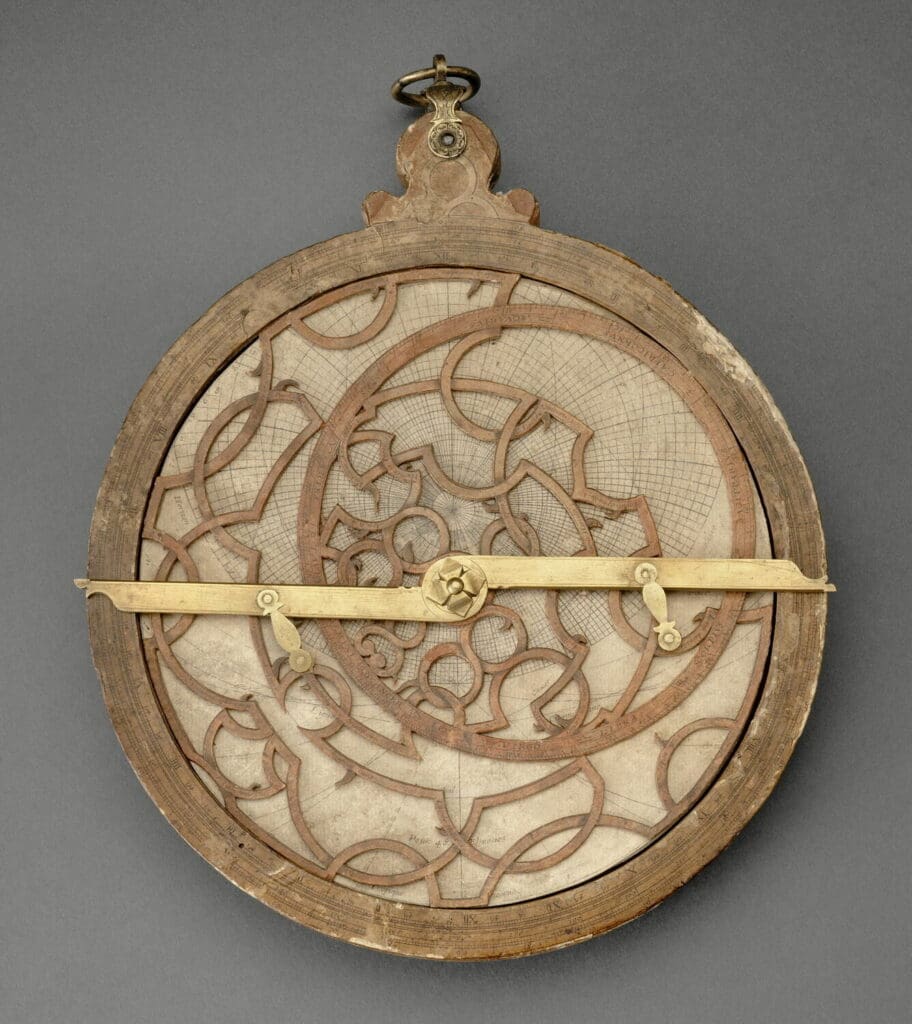
Astrolabe planisphérique – Picquet, Claude, Musée du Louvre, Département des Objets d’art du Moyen Age, de la Renaissance et des temps modernes
Methodology and Editorial Standards
Each interview in this series follows a consistent editorial methodology designed to ensure accuracy, depth, and professional relevance.
I select Interviewees based on verified training, certification, lineage, and sustained practice. Conversations are conducted in long-form, transcribed, edited for clarity, and contextualised within the broader history and methodology of astrocartography. Emphasis is placed on technique, geographic application, and experiential knowledge rather than abstract theory.
This approach positions the series as documentation and archival research rather than commentary.
A Living Reference for European Astrocartography®
This page functions as the central hub for the European Astrocartography Interview Series. As new interviews are published, they are indexed here to maintain continuity, accessibility, and long-term relevance. Where applicable, articles are personally translated and adapted to reflect linguistic and cultural nuance, reinforcing the series’ bilingual and cross-border scope.
Together, these interviews form the first publicly accessible record dedicated exclusively to contemporary European astrocartography practice.
First Interview in the European Astrocartography® Interview Series: Faye Blake on the Business of Place
Astrocartography – Mapping the Business of Place
My first interview in the European Astrocartography Interview Series begins with Faye Blake in Amsterdam whose work bridges business consulting, psychology, and astrological mapping. Moreover, her constribution to From Here to There: An Astrologer’s Guide to Astromapping remains one of the earliest European analyses. She discusses how planetary lines inform organisational identity and decision-making. In our conversation, she expands on methodology, corporate charts, and the practical realities of interpreting place through an astrological lens.
Astrocartography – Choosing the Sky for the Year
Astrocartography at High Latitudes
Edited and published, Kristine Odegard, Certified Astrocartographer.


Comments +